 Power Greens Premium Berry | NuMedica





Power Greens Premium Berry
30/42 Servings
by NuMedica
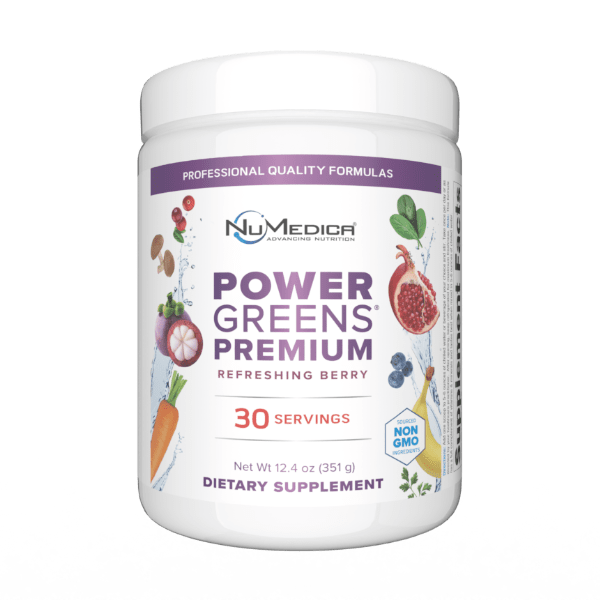
30 Servings
by NuMedica
42 Servings
by NuMedica
NuMedica Power Greens Premium Berry
Greens powder with added vitamins and minerals for broader nutritional coverage*
A greens powder with added vitamins and minerals, commonly used in routines related to broader nutritional coverage.*
Warning: Array to string conversion in /home/cdndelivery/public_html/php/show_project_brand_product.php on line 840
Array
30 Servings
by NuMedica
42 Servings
by NuMedica
-
Description*
Power Greens Premium Berry is a powdered greens formula that builds on the foundational Power Greens blend by adding a full complement of vitamins and minerals. It combines concentrated plant-based ingredients with food-derived micronutrients in a single, easy-to-mix format. The formula is designed for adults who want more nutritional depth than a basic greens powder, without having to manage multiple supplements.
What distinguishes the premium formula
While Power Greens focuses on foundational greens and digestive components, the Premium Berry formula expands the scope to include added vitamins and minerals commonly used to support everyday metabolic processes. These nutrients are included to help maintain baseline coverage when dietary intake varies. The emphasis is practical completeness rather than targeted or condition-specific use.
Plant-based ingredients and micronutrient context
Power Greens Premium Berry includes a broad range of whole food plant extracts that contribute naturally occurring phytonutrients. These compounds are commonly studied for their role in managing oxidative byproducts produced during normal metabolism. The formula also incorporates food-derived minerals and vitamin forms selected for compatibility with daily use rather than high-dose intervention.
Digestive and stress-related components
In addition to greens and micronutrients, the Premium Berry formula includes digestive enzymes and probiotic strains intended to support normal digestive function. Adaptogenic plant ingredients are included to align with traditional use patterns related to stress exposure and daily resilience. These components are not intended to produce acute effects but to fit within steady, routine use.
How Power Greens Premium Berry fits within the product family
Within the NuMedica Power Greens family, the Premium Berry formula represents the most comprehensive option in terms of ingredient breadth. It sits between a simple greens powder and a multi-product nutritional routine. Other family options focus either on streamlined greens support or on expanding plant color variety rather than adding vitamins and minerals.
Comparison of NuMedica Power Greens family formulas Power Greens Power Greens Premium Berry Power Greens & Reds Form Greens powder Greens powder with added vitamins and minerals Greens and reds powder Primary focus Foundational greens support Broader nutritional coverage Expanded plant color spectrum Vitamins and minerals Food-derived only Added vitamins and minerals Food-derived only Digestive components Included Included Included Best fit Simple daily greens use Those wanting greens plus micronutrient support Those prioritizing additional fruit-derived compounds How Power Greens Premium Berry is commonly used
Power Greens Premium Berry is typically mixed with water, juice, or a smoothie and used once daily as part of a broader routine. It is often chosen by individuals who prefer a single product that combines greens and micronutrients rather than layering multiple supplements. The product is not intended to replace whole foods or dietary variety.
Who Power Greens Premium Berry is most appropriate for
Power Greens Premium Berry may be a practical option for adults who want more comprehensive nutritional coverage than a basic greens powder provides. It often suits those with variable diets, busy schedules, or a preference for simplified routines. As with any supplement, personal preferences, tolerance, and overall dietary patterns should guide selection.
-
Features*
-
Directions
Product ServingSize NumberServings Power Greens Premium Berry - 30 Servings 1 scoop (11.7 g) 30 Power Greens Premium Berry - 42 Servings 1 scoop (11.7 g) 42 Directions: Add one scoop (11.7 g) to 5-6 ounces of chilled water or beverage of your choice and stir. Take once per day or as directed by your healthcare practitioner. After opening, keep refrigerated for maximum freshness. Note: This formula has a full complement of vitamins and minerals and tastes best when mixed in 5-6 ounces of chilled water.
-
Ingredients
Nutrient/Ingredient Amount % Daily ValueDV 1 Calories Calories
When people talk about the calories in food, what do they mean? A calorie is a unit of measurement—but it doesn't measure weight or length. A calorie is a unit of energy. When you hear something contains 100 calories, it's a way of describing how much energy your body could get from eating or drinking it.
KidsHealth from Nemours, https://kidshealth.org/en/kids/calorie.html
40 Total Fat Total Fat
This number on a food label indicates how much fat is in a single serving of a food. Limit total fat to less than 25% to 35% percent of the calories you consume each day. All fats have 9 calories per gram.
WebMD, https://www.webmd.com/food-recipes/definitions-glossary
1 g Saturated Fat Saturated Fat
Usually solid at room temperature, saturated fats are found in animal products such as meat and milk, as well as in coconut and palm oil. Saturated fat is often used in foods to prevent rancidity and off flavors. No more than 5% to 10% of your total daily calories should come from saturated fat.
WebMD, https://www.webmd.com/food-recipes/definitions-glossary
< 1 g Total Carbohydrate Total Carbohydrate
This number on a food label indicates how many grams of carbohydrates are in a single serving of a food.
WebMD, https://www.webmd.com/food-recipes/definitions-glossary
7 g Dietary Fiber Dietary Fiber
Dietary Fiber supports digestive regularity, gut microbiome balance, and healthy blood sugar and cholesterol levels.
1 g Total Sugars Total Sugars
This section of the nutrition label lists added and natural sugars separately. Added sugars include sucrose, glucose, fructose, and corn and maple syrups. Natural sugars include lactose in milk and fructose in fruit. If you are concerned about your intake of sugar, be sure added sugars are not one of the first few items in a food's ingredients list.
WebMD, https://www.webmd.com/food-recipes/definitions-glossary
3 g Protein Protein
Protein provides essential amino acids to support muscle repair, immune health, and overall metabolic function.
1 g Vitamin A (as beta-carotene) (1,500 IU) Vitamin A
Vitamin A supports vision, immune health, and the maintenance of healthy skin and mucous membranes.
450 mcg RAE Vitamin C (as ascorbic acid) Vitamin C
Vitamin C is a powerful antioxidant that supports immune health, collagen synthesis, and iron absorption.
60 mg Vitamin D3 (as cholecalciferol) (plant-derived) (120 IU) Vitamin D3
Vitamin D3 is the bioactive form of vitamin D that enhances calcium absorption and bone health.
3 mcg Vitamin E (as d-alpha-tocopheryl acetate) (9 IU) Vitamin E
Vitamin E is a fat-soluble antioxidant that protects cell membranes and supports skin and immune health.
6 mg Vitamin K1 (as phytonadione) Vitamin K1
Vitamin K1 supports normal blood coagulation and bone health by assisting in calcium metabolism.
80 mcg Thiamin (Vitamin B₁) (as thiamin hydrochloride) Thiamin
Thiamin (Vitamin B1) supports energy metabolism, nerve function, and glucose utilization.
0.45 mcg Riboflavin (Vitamin B2) Riboflavin
Riboflavin (Vitamin B2) supports energy metabolism, red blood cell formation, and antioxidant protection.
0.51 mcg Niacin (as niacinamide) Niacin
Niacin (Vitamin B3) supports energy metabolism, cardiovascular health, and healthy lipid levels.
6 mg NE Vitamin B6 (as pyridoxal-5'-phosphate) Vitamin B6
Vitamin B6 supports amino acid metabolism, cognitive development, and immune function.
0.6 mcg Folate (as 200 mcg (6S)-5-methyltetrahydrofolic acid, glucosamine salt)‡ Folate
Folate is a B vitamin important for DNA synthesis, cell division, and prenatal development. It supports cardiovascular and neurological health.
340 mcg DFE Vitamin B12 (as methylcobalamin) Vitamin B12
Vitamin B12 is essential for red blood cell formation, neurological function, and DNA synthesis.
30 mcg Biotin Biotin
Biotin is a B vitamin (B7) essential for carbohydrate metabolism, skin, hair, and nail health. It also supports nervous system function.
90 mcg Pantothenic Acid (as calcium d-pantothenate) Pantothenic Acid
Pantothenic Acid (Vitamin B5) supports adrenal function, energy metabolism, and synthesis of coenzyme A.
3 mg Calcium (as tricalcium phosphate, Algas calcareas) Calcium
Calcium is an essential mineral needed for bone density, muscle contraction, nerve signaling, and overall structural support.
350 mg Phosphorus (as dipotassium phosphate, magnesium phosphate, tricalcium phosphate) Phosphorus
Phosphorus is a major mineral essential for bone health, energy production, and cellular repair.
300 mg Iodine (as potassium iodide) Iodine
Iodine is an essential trace element required for thyroid hormone synthesis, supporting metabolism, energy, and development.
45 mcg Magnesium (as magnesium phosphate, Algas calcareas)‡‡ Magnesium
Magnesium is a vital mineral involved in muscle function, bone health, energy production, and nerve signaling.
120 mg Zinc (as zinc oxide) Zinc
Zinc is a trace mineral that supports immune function, wound healing, and DNA synthesis.
4.5 mg Selenium (as sodium selenite) Selenium
Selenium is a trace mineral that supports thyroid function, antioxidant defense, and immune health.
21 mcg Manganese (as manganese sulfate) Manganese
Manganese is a trace mineral essential for bone development, metabolism, and antioxidant enzyme function.
0.6 mcg Chromium (as chromium picolinate) Chromium
Chromium is a trace mineral that plays a role in carbohydrate metabolism and helps maintain healthy blood sugar levels by improving insulin sensitivity.
120 mcg Molybdenum (as sodium molybdate) Molybdenum
Molybdenum is a trace mineral that supports enzyme function and the breakdown of certain amino acids and toxins.
23 mcg Sodium Sodium
While sodium (commonly called salt) is vital for healthy nerves and muscles, most of us get too much salt in our diet, often from processed foods. Read food labels to help keep your sodium intake to 2,300 milligrams a day or less. Persons 51 and older, African Americans, or people who have hypertension, diabetes or chronic kidney disease should limit sodium to 1500 milligrams daily.
WebMD, https://www.webmd.com/food-recipes/definitions-glossary
13 mg Potassium (as dipotassium phosphate, potassium iodide) Potassium
Potassium is an essential mineral that supports fluid balance, muscle contraction, and nerve transmission.
99 mg Antioxidant & Superfruit Blend* Banana (Musa paradisiaca) (fruit) (certified organic), Apple (Malus pumila) (fruit) extract (12:1), Lycium (Lycium barbarum) (fruit) powder (certified organic), Pomegranate (Punica granatum) (fruit) powder, Mangosteen (Garcinia mangostana) (fruit) powder, Acai (Euterpe oleracea) (fruit) extract, Apple (Malus pumila) (fruit) powder, Grape (Vitis vinifera) (seed) extract, Pomegranate (Punica granatum) (fruit) extract, Mangosteen (Garcinia mangostana) (fruit) extract, Stevia (Stevia rebaudiana) (leaf) extract, Bilberry (Vaccinium myrtillus) (fruit) extract, American Elder (Sambucus canadensis) (fruit) extract, Blueberry (Vaccinium angustifolium) (fruit) extract (150:1). 4,510 mg Greens Blend Chlorella (Chlorella vulgaris) (broken cell), Algas calcareas (certified organic)‡‡, Spirulina (Spirulina maxima), Broccoli (Brassica oleracea) (seed) extract providing sulforaphane glucosinolate†††, Broccoli (Brassica oleracea) (head) powder, Cauliflower (Brassica oleracea) (aerial parts) powder, Collard (Brassica oleracea) (leaf) powder, Spinach (Spinacia oleracea) (leaf) powder, Carrot (Daucus carota) (root) powder, Parsley (Petroselinum crispum) (leaf) powder, Kelp (Laminaria setchellii) (whole) extract (4:1). 1,800 mg Sunflower Lecithin (Non-GMO) 1,000 mg Plant Fiber & Essential Omega Blend* Black Chia (Salvia columbariae) (seed) (certified organic), Brown Flax (Linum usitatissimum) (seed) (certified organic), Apple (Malus pumila) (fruit) pectin. 600 mg Adaptogenic Herbs & Detoxifiers* Astragalus (Astragalus membranaceus) (root) extract, Reishi (Ganoderma lucidum) (fruit body) extract, Maitake (Grifola frondosa) (fruit body) extract, Shiitake (Lentinus edodes) (fruit body) extract, Cordyceps (Cordyceps sinensis) (mycelium) extract, Ginger (Zingiber officinale) (root) extract. 425 mg Prebiotic & Probiotic Blend Inulin (from chicory (Cichorium intybus) (root)), Lactobacillus acidophilus††. 355 mg Digestive Enzyme Blend* Protease I, Protease II, Amylase, Lipase, Lactase. 200 mg Immuni-Tea Boosting Blend* White Tea (leaf) extract (decaffeinated), Green Tea (leaf) extract (95% polyphenols, 50% EGCG) (decaffeinated), Green Tea (leaf) powder (certified organic), Mate (Ilex paraguariensis) (leaf) powder. 140 mg Milk Thistle Extract (Silybum marianum) (seed) (80% silymarin) Milk Thistle Extract
Milk Thistle Extract contains silymarin, which supports liver function, detoxification, and antioxidant activity.
55 mg Japanese Knotweed (Polygonum cuspidatum) (root) extract (20% resveratrol) Japanese Knotweed
Japanese Knotweed is a plant source of resveratrol, supporting cardiovascular, cellular, and inflammatory health.
40 mg Turmeric Extract (Curcuma longa) (root) (95% curcuminoids) Turmeric Extract
Turmeric Extract contains curcuminoids that support inflammation control and antioxidant defense.
25 mg Sulforaphane Glucosinolate ††† Sulforaphane Glucosinolate
Sulforaphane Glucosinolate is a compound from cruciferous vegetables that supports detoxification and antioxidant defense.
10 mg Licorice Root Extract (Glycrrhiza echinata L.) (Deglycyrrhizinated) < 2% DGL) Licorice Root Extract
Licorice Root Extract supports adrenal health, digestion, and respiratory function with natural anti-inflammatory and soothing properties.
3 mg 1 The % Daily Value tells you how much a nutrient in a serving of food contributes to a daily diet. 2,000 calories a day is used for general nutrition advise. -
Questions*
 Questions
If you have a question not answered on this page, please consider submitting it in the Product Questions or Feedback section in the Discussion Forum below.
 How does Power Greens Premium Berry differ from Power Greens?
Power Greens Premium Berry builds on the foundational Power Greens formula by adding a full complement of vitamins and minerals. While Power Greens focuses solely on greens and digestive components, the Premium Berry version is designed for those who want broader nutritional coverage in a single product.
Does Power Greens Premium Berry replace a multivitamin?
Power Greens Premium Berry includes added vitamins and minerals, but it is not intended to function as a complete replacement for all multivitamin formulations. It may reduce the need for multiple products in some routines, but individual needs and dietary patterns vary.
Why does this formula include both greens and micronutrients?
This formula is designed for adults who want the convenience of combining plant-based greens with added vitamins and minerals. The goal is to support baseline nutritional coverage when diet quality or variety fluctuates, rather than to target specific conditions.
Does the Berry flavor change the nutritional content?
No. The Berry flavor reflects taste preference only. The nutritional profile of Power Greens Premium Berry is consistent regardless of flavor-related ingredients used for palatability.
Who typically considers using Power Greens Premium Berry?
Power Greens Premium Berry is often chosen by individuals who want more comprehensive support than a basic greens powder provides but prefer a simpler routine than managing multiple supplements. Personal preferences, tolerance, and overall diet should guide use.
-
Related Content*
Additional Resources
We encourage you to take advantage of these related Wellness Resources on our website.
 A Complete Guide to Colon and Digestive Health for Women
Whether you're a woman or a man, the colon and digestive system are essential to the overall health of your body. But that doesn't mean there aren't differences in how these systems function between sexes.
Fruit and Vegetable Supplements: Finding Truth in a CrazeFruit and vegetable supplements continue to generate debate: are they a legitimate way to fill nutritional gaps, or just another wellness craze? As science evolves, it's clear that these products can play a meaningful role when chosen wisely - but only if you understand what they are (and aren't) intended to do.
Juicing Recipes: Targeting Health BenefitsDid you just get a juicer and are now looking for recipes and advice for what to put in your juice? You may be wondering what are the best fruits and vegetables for juicing. You may even want to include healthy superfoods! But what are they?
You have plenty of options at your fingertips. Read on to learn how to put together a juice that taste great and meets your health goals.
Simple Tips for Proper HydrationGetting enough water has numerous health benefits including combating fatigue, loosing weight, and flushing toxins out of your body. Follow these east hydration tips and reap the benefits!
Top Reasons to Avoid Diet Drinks - What the Research Actually ShowsMany people assume diet sodas are a smarter alternative to regular soft drinks, but growing research tells another story. Artificially sweetened beverages have been tied to higher risks of obesity, stroke, kidney decline, and cardiovascular problems. Even without sugar, their acidity can damage teeth and bone health, leaving you with concerns that go far beyond calories.

Fatal error: Uncaught Error: Undefined constant "MEDIA_DIRECTORY" in /home/cdndelivery/public_html/includes/core.php:7324 Stack trace: #0 /home/cdndelivery/public_html/php/show_product_reviews.php(215): displayRatingStars('3', 'FA', '1X') #1 /home/cdndelivery/public_html/php/show_project_brand_product.php(1076): include_once('/home/cdndelive...') #2 /home/cdndelivery/public_html/product/index.php(13): require_once('/home/cdndelive...') #3 /home/cdndelivery/public_html/url-traffic-manager/index.php(201): include('/home/cdndelive...') #4 {main} thrown in /home/cdndelivery/public_html/includes/core.php on line 7324