 D3-10,000 + K2 | NuMedica





D3-10,000 + K2
60 Softgels
by NuMedica
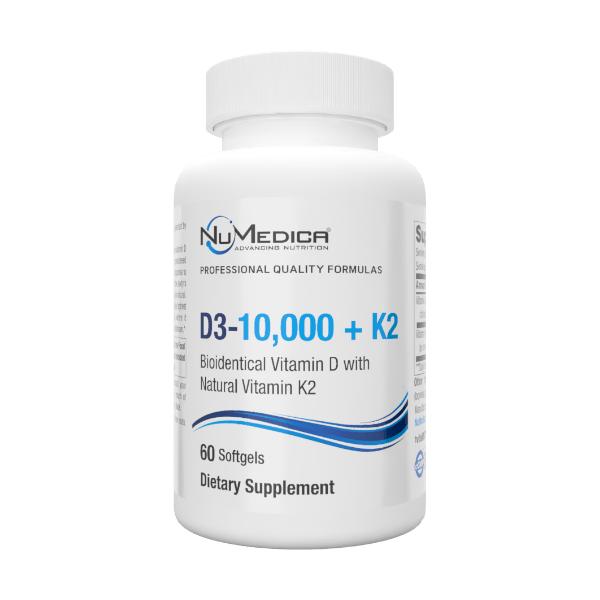
NuMedica D3-10,000 + K2
Immune & Bone Health Support*
NuMedica D3-10,000 + K2 provides 10,000 IU of vitamin D3 with vitamin K2 for bone, immune, and wellness-focused routines. Available in 60-softgel size.*
Warning: Array to string conversion in /home/cdndelivery/public_html/php/show_project_brand_product.php on line 840
Array
-
Description*
Very high-dose vitamin D with K2 for structured, higher-intake routines
NuMedica D3-10,000 + K2 provides a high 10,000 IU dose of vitamin D3 combined with vitamin K2 in a single softgel. This is positioned for individuals who are intentionally using higher amounts of vitamin D and want K2 included as part of that approach.
This product is typically chosen when lower-dose options such as 2,000 or 5,000 IU are no longer the focus. It represents a more deliberate routine where both dose level and nutrient pairing are considered together.
Compared to D3-5,000 + K2-200, this formula increases the vitamin D dose significantly while using a lower amount of K2. Compared to standalone D3 products, it shifts away from simplicity and into a more structured combination approach.
How this product is commonly used
D3-10,000 + K2 is typically taken once daily as part of a consistent routine. It is often used in place of lower-dose products rather than combined with them.
It is commonly selected by individuals who want a single, high-strength option instead of taking multiple softgels or adjusting dosing throughout the day.
Formulation approach
This formula combines vitamin D3 (cholecalciferol) with vitamin K2 as menaquinone-7 (MK-7). The inclusion of K2 reflects a paired approach rather than treating vitamin D as a standalone nutrient.
The oil-based softgel format aligns with fat-soluble delivery, keeping the formula consistent with other high-dose options while adding the K2 component.
Comparison
Product Best for Format Approach D3-5,000 + K2-200 Moderate high-dose with K2 Softgel Balanced D3 + K2 combination D3-10,000 + K2 Very high-dose daily use Softgel High-intensity D3 + K2 D3-5,000 High-dose D3 only Softgel Standalone vitamin D Micellized D3 + K2 Flexible dosing with K2 Liquid Adjustable D3 + K2 intake Who this is for / not for
Best for:
- Individuals intentionally using higher daily vitamin D amounts
- Those who want K2 included in a high-dose formula
- Those preferring a single, fixed high-strength softgel
Not ideal for:
- Those starting with vitamin D supplementation
- Those who prefer lower or moderate daily intake
- Those who need flexible or adjustable dosing
-
Features*
-
Directions
Size: 60 Softgels
Serving Size: 1 Softgel
Servings Per Container: 60
Directions: Take one softgel once per day or as directed by your healthcare practitioner.
-
Ingredients
Nutrient/Ingredient Amount % Daily ValueDV 1 One Softgel Contains:
Vitamin D3 (as cholecalciferol) (10,000 IU) Vitamin D3
Vitamin D3 is the bioactive form of vitamin D that enhances calcium absorption and bone health.
250 mcg Vitamin K2 (as menaquinone-7)† Vitamin K2
Vitamin K2 helps regulate calcium in the body, supporting cardiovascular and bone health.
50 mcg 1 The % Daily Value tells you how much a nutrient in a serving of food contributes to a daily diet. 2,000 calories a day is used for general nutrition advise. -
Questions*
 Questions
If you have a question not answered on this page, please consider submitting it in the Product Questions or Feedback section in the Discussion Forum below.
 Who typically chooses a 10,000 IU product?
This level is usually selected by individuals who are intentionally using a higher daily intake rather than starting with lower-dose options.
How does this compare to D3-5,000 + K2?
The primary difference is the vitamin D amount. This product provides a higher intake in a single softgel, while D3-5,000 + K2 is a more moderate option.
Is this meant to be combined with other D3 products?
It is typically used on its own rather than combined with other vitamin D supplements.
Why include K2 in a high-dose formula?
This product is designed as a combined approach, pairing vitamin D with K2 rather than treating them as separate decisions.
When would someone choose a lower-dose option instead?
Lower-dose options are usually preferred for starting routines or when a more moderate daily intake is desired.
-
Related Content*
Additional Resources
We encourage you to take advantage of these related Wellness Resources on our website.
 5 Common Signs of Vitamin Deficiency
You would think with the abundance of foods available to us that we would all be well nourished. Sadly, about 50% of the foods we eat are heavily processed and nutritionally void. How can you tell if you have a deficiency without taking a blood test? Let's take a look at some of the common signs of vitamin deficiency and how to introduce better nutrition into our lives.
Bone Health and Supplementation for SeniorsBone health becomes more important with age. Beyond structure and mobility, bones help regulate minerals and influence overall wellness. Seniors face unique challenges-declining density, hormonal shifts, and higher fracture risk-so a steady plan blends daily movement, nourishing foods, calm stress management, and targeted supplementation when appropriate.
How and When to Take SupplementsSo how can you keep up with your supplements and make sure that you're taking them correctly? Let's take a look at the best practices so you can make the most of your supplementation.
How to Use Vitamin D3, Zinc, and Vitamin C in a Daily Wellness PlanPeople often hear about vitamin D3, zinc, and vitamin C whenever immune health comes up, but it is not always clear how these nutrients fit into an everyday wellness routine. Modern schedules, indoor work, and shifting stress levels can influence how much of each we get and how well our bodies use them. Understanding what these nutrients actually do, where they come from, and when supplements make sense can help you build a daily plan that feels steady rather than reactive.
Seasonal Allergies, Diet & Quality SupplementsMany of us (around 10%) suffer from the irritating symptoms of seasonal allergies. While they are more common in the Spring, Fall, and Summer and less common in the Winter, there are common medications you can easily get from your health-care provider, even over-the-counter. However, alleviating these symptoms may also be achieved through changes in diet and supplementation.
Understanding the Difference Between Fat-Soluble and Water-Soluble VitaminsVitamins are micronutrients important in maintaining our overall health and well-being. They are required for various bodily functions, including immune support, energy production, and healthy appearance. There are two main categories of vitamins: fat-soluble and water-soluble. Learn the differences between these two categories and their significance.
Understanding Vitamin D in Everyday LifeVitamin D is often discussed differently from many other nutrients because it sits at the intersection of sunlight, food, environment, and supplementation. Unlike nutrients that come only from diet, vitamin D is also produced in the body under certain conditions, which makes it one of the more unique vitamins within everyday nutrition.
Vitamin D and Mental HealthVitamin D is commonly known as the 'sunshine vitamin.' This is simply because, when exposed to the sun, our bodies produce the vitamin. Let's take a look at what the science shows about how this vital vitamin impacts our mental health.
Vitamins: Multi-Vitamin or Single Supplements? What You Need to KnowVitamins are essential to health, yet most people don't get enough from diet alone. Busy lifestyles, soil depletion, and poor dietary habits often mean that supplementation plays an important role in meeting nutritional needs. But should you choose a broad-spectrum multi-vitamin or focus on targeted single supplements? The answer depends on your health goals and current nutritional gaps.

Fatal error: Uncaught Error: Undefined constant "MEDIA_DIRECTORY" in /home/cdndelivery/public_html/includes/core.php:7324 Stack trace: #0 /home/cdndelivery/public_html/php/show_product_reviews.php(215): displayRatingStars('5', 'FA', '1X') #1 /home/cdndelivery/public_html/php/show_project_brand_product.php(1076): include_once('/home/cdndelive...') #2 /home/cdndelivery/public_html/product/index.php(13): require_once('/home/cdndelive...') #3 /home/cdndelivery/public_html/url-traffic-manager/index.php(201): include('/home/cdndelive...') #4 {main} thrown in /home/cdndelivery/public_html/includes/core.php on line 7324