 NuMedica ProGI Soothe | Gastrointestinal & Liver Support in Vanilla





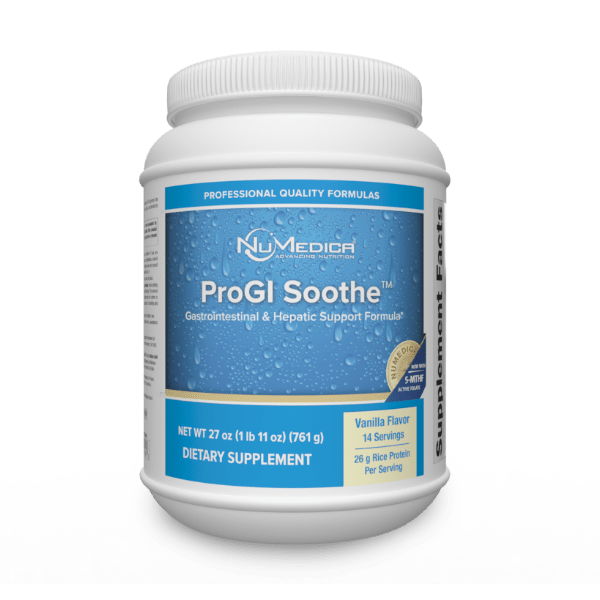
ProGI Soothe
Vanilla | 14 Servings
by NuMedica
 Product currently not available from NuMedica—estimated date not known. Will be relisted when we have more specific information.
NuMedica ProGI Soothe
Gastrointestinal & Hepatic Support*
NuMedica ProGI Soothe supports gastrointestinal and liver health with a hypoallergenic rice protein formula. Available in Vanilla flavor.*
NuMedica is reformulating ProGI Soothe anticipating it back in stock sometime April - June 2026. Best alternative till then is Dual-Tox DPO Capsules + NuMedica Total Vegan Protein.
Warning: Array to string conversion in /home/cdndelivery/public_html/php/show_project_brand_product.php on line 840
Array
-
Description*
NuMedica ProGI Soothe is a premium supplement, distinguished by its hypoallergenic formula and a rich array of vitamins and minerals. It is specifically designed to support gastrointestinal and liver health. This versatile supplement is ideal for individuals with sensitive digestive systems, delivering easily digestible rice protein and a wide range of nutrients that target digestive and liver function.
Key Features of NuMedica ProGI Soothe
- Gastrointestinal & Hepatic Support: ProGI Soothe™ is an easily digestible, well-tolerated rice protein that provides support for healthy gastrointestinal and hepatic function.
- Comprehensive Amino Acids: The specially processed rice protein in this formula provides a full complement of essential and non-essential amino acids, including the sulfur-containing amino acids cysteine and methionine.
- Advanced Folate Support: The 5-MTHF in this formula - Quatrefolic® - is the most biologically active form of folate, ensuring rapid uptake into the bloodstream.* The 5-MTHF in this formula is also known as the "L" form of 5-MTHF since it is the reduced form of folate.
Comprehensive Nutritional Profile
NuMedica ProGI Soothe is packed with essential nutrients and bioactive compounds that promote gastrointestinal and liver health. This formula provides important vitamins and minerals for overall wellness.
Vitamins and Minerals:
- Vitamin A (as 100% beta-carotene): Supports healthy vision, skin, and immune function.
- Vitamin C (from potassium, calcium, and magnesium ascorbate blend): A powerful antioxidant that aids immune system function and skin health.
- Vitamin D (as cholecalciferol): Facilitates calcium absorption and promotes bone health.
- Vitamin E (as d-alpha tocopherol succinate): Protects cells from oxidative damage.
- B-Vitamins: (Thiamin, Riboflavin, Niacin, B6, B12, Biotin, Pantothenic Acid): Support energy metabolism, brain function, and cell health.
- Folate (as 5-MTHF): Plays a critical role in DNA synthesis and repair while also aiding in red blood cell production.
- Minerals: (Calcium, Magnesium, Zinc, Selenium, and more): Essential for bone health, enzymatic reactions, and immune function.
Specialized Ingredients for Gastrointestinal Health:
- L-Glutamine: Supports the integrity of the intestinal lining and may help prevent leaky gut syndrome.
- Probiotics and Digestive Enzymes (Protease): Enhance protein digestion and promote a healthy balance of gut bacteria for improved digestion and nutrient absorption.
- Flax Seed: Rich in dietary fiber and omega-3 fatty acids, it supports digestive health and promotes regular bowel movements.
- Pomegranate Extract: Provides ellagic acid, which has antioxidant properties that help protect the gut lining and promote gastrointestinal health.
Liver Support and Detoxification:
- Milk Thistle (Silymarin): Known for its liver-protective effects, it helps detoxify and regenerate liver cells.
- N-Acetyl L-Cysteine (NAC): Supports the production of glutathione, a powerful antioxidant that detoxifies the liver.
- Turmeric Extract (Curcumin): Possesses anti-inflammatory and antioxidant properties, helping to protect the liver and support its detoxification processes.
- Green Tea Extract: Contains polyphenols and EGCG, which reduce oxidative stress and support liver health.
Why Choose NuMedica ProGI Soothe?
NuMedica ProGI Soothe provides comprehensive support for your digestive and liver health. Backed by extensive research, this supplement is crafted with the highest quality ingredients, reflecting NuMedica's dedication to excellence in the nutritional supplement industry.
Support Your Gastrointestinal Tract with NuMedica ProGI Soothe
A well-functioning gastrointestinal tract is vital for immune health and overall well-being. NuMedica ProGI Soothe supports digestion, nutrient absorption, and detoxification, ensuring your body can efficiently manage and eliminate toxins.
Liver Support
Our livers work tirelessly to detoxify environmental toxins. NuMedica ProGI Soothe supports the liver's natural detoxification processes, protecting your body from harmful pollutants and promoting optimal liver function.
Comprehensive Health Support
NuMedica ProGI Soothe offers a comprehensive solution for gastrointestinal and liver health. Choose the flavor best suits your preference and enjoy this supplement's numerous health benefits.
Note: Consult with your healthcare provider before starting any new supplement regimen, particularly if you have underlying health conditions or are taking medication.
-
Features*
-
Directions
Product Size Serving
SizeNumber
ServingsProgi Soothe Vanilla 14 Servings 2 Scoops (54 g) 14 Directions: Stir or blend 2 scoops into 8 ounces of water. Take once per day or as directed by your healthcare practitioner.
-
Ingredients
Nutrient/Ingredient Amount % Daily ValueDV 1 Calories Calories
When people talk about the calories in food, what do they mean? A calorie is a unit of measurement—but it doesn't measure weight or length. A calorie is a unit of energy. When you hear something contains 100 calories, it's a way of describing how much energy your body could get from eating or drinking it.
KidsHealth from Nemours, https://kidshealth.org/en/kids/calorie.html
180 Two Scoops (50.53 g) Contain:
Total Fat Total Fat
This number on a food label indicates how much fat is in a single serving of a food. Limit total fat to less than 25% to 35% percent of the calories you consume each day. All fats have 9 calories per gram.
WebMD, https://www.webmd.com/food-recipes/definitions-glossary
4 g Total Carbohydrate Total Carbohydrate
This number on a food label indicates how many grams of carbohydrates are in a single serving of a food.
WebMD, https://www.webmd.com/food-recipes/definitions-glossary
12 g Dietary Fiber Dietary Fiber
Dietary Fiber supports digestive regularity, gut microbiome balance, and healthy blood sugar and cholesterol levels.
5 g Protein Protein
Protein provides essential amino acids to support muscle repair, immune health, and overall metabolic function.
26 g Vitamin A (as 100% beta certene) (2,500 IU) Vitamin A
Vitamin A supports vision, immune health, and the maintenance of healthy skin and mucous membranes.
750 mg Vitamin C (from potassium, calcium and magnesium ascorbate blend) Vitamin C
Vitamin C is a powerful antioxidant that supports immune health, collagen synthesis, and iron absorption.
250 mg Vitamin D (as cholecalciferol) (100 IU) Vitamin D
Vitamin D helps maintain bone density and supports immune function by regulating calcium and phosphorus levels.
2.5 mg Vitamin E (as d-alpha tocopherol succinate) (125 IU) Vitamin E
Vitamin E is a fat-soluble antioxidant that protects cell membranes and supports skin and immune health.
84 mg Thiamin (Vitamin B1) (as thiamin hydrochloride) Thiamin
Thiamin (Vitamin B1) supports energy metabolism, nerve function, and glucose utilization.
15 mg Riboflavin (Vitamin B2) (as riboflavin-5'-phosphate) Riboflavin
Riboflavin (Vitamin B2) supports energy metabolism, red blood cell formation, and antioxidant protection.
5 mg Niacin (as niacinamide and niacin) Niacin
Niacin (Vitamin B3) supports energy metabolism, cardiovascular health, and healthy lipid levels.
40 mg Vitamin B6 (as pyridoxal-5'-phosphate) Vitamin B6
Vitamin B6 supports amino acid metabolism, cognitive development, and immune function.
6 mg Folate (as 200 mcg 6(S)-5-methyltetrahydrofolic acid, glucosamine salt) Folate
Folate is a B vitamin important for DNA synthesis, cell division, and prenatal development. It supports cardiovascular and neurological health.
340 mcg Vitamin B12 (as methylcobalamin) Vitamin B12
Vitamin B12 is essential for red blood cell formation, neurological function, and DNA synthesis.
50 mcg Biotin Biotin
Biotin is a B vitamin (B7) essential for carbohydrate metabolism, skin, hair, and nail health. It also supports nervous system function.
150 mcg Pantothenic Acid (as d-calcium pantothenate) Pantothenic Acid
Pantothenic Acid (Vitamin B5) supports adrenal function, energy metabolism, and synthesis of coenzyme A.
35 mg Choline (as choline bitartrate) Choline
Choline is a vital nutrient for brain health, liver function, and cellular membrane integrity. It also supports methylation and nervous system signaling.
100 mg Calcium (from di-calcium malate) Calcium
Calcium is an essential mineral needed for bone density, muscle contraction, nerve signaling, and overall structural support.
320 mg Phosphorus (as di-potassium phosphate) Phosphorus
Phosphorus is a major mineral essential for bone health, energy production, and cellular repair.
600 mcg Iodine (as potassium iodide) Iodine
Iodine is an essential trace element required for thyroid hormone synthesis, supporting metabolism, energy, and development.
60 mcg Magnesium (as di-magnesium malate) Magnesium
Magnesium is a vital mineral involved in muscle function, bone health, energy production, and nerve signaling.
280 mg Zinc (as zinc bisglycinate chelate) Zinc
Zinc is a trace mineral that supports immune function, wound healing, and DNA synthesis.
10 mcg Selenium (as selenium glycinate complex) Selenium
Selenium is a trace mineral that supports thyroid function, antioxidant defense, and immune health.
100 mg Manganese (as manganese bisglycinate chelate) Manganese
Manganese is a trace mineral essential for bone development, metabolism, and antioxidant enzyme function.
2 mcg Chromium (as chromium nicotinate glycinate chelate) Chromium
Chromium is a trace mineral that plays a role in carbohydrate metabolism and helps maintain healthy blood sugar levels by improving insulin sensitivity.
60 mcg Molybdenum (as molybdenum glycinate chelate) Molybdenum
Molybdenum is a trace mineral that supports enzyme function and the breakdown of certain amino acids and toxins.
35 mcg Sodium Sodium
While sodium (commonly called salt) is vital for healthy nerves and muscles, most of us get too much salt in our diet, often from processed foods. Read food labels to help keep your sodium intake to 2,300 milligrams a day or less. Persons 51 and older, African Americans, or people who have hypertension, diabetes or chronic kidney disease should limit sodium to 1500 milligrams daily.
WebMD, https://www.webmd.com/food-recipes/definitions-glossary
105 mg Potassium Potassium
Potassium is an essential mineral that supports fluid balance, muscle contraction, and nerve transmission.
700 mg Flaxseed Complex (Linum usitatissimum) Flaxseed Complex
Flaxseed Complex provides omega-3 fatty acids, fiber, and lignans that support heart health, hormonal balance, and digestion.
6,000 mg L-Glutamine L-Glutamine
L-Glutamine is a conditionally essential amino acid that supports gut health, muscle recovery, and immune function.
4,316 mg L-Glycine L-Glycine
L-Glycine supports collagen synthesis, detoxification, and restful sleep, and serves as a neurotransmitter in the brain.
477 mg Pomegranate Extract (Punica granatum) (hull) (40% ellagic acid) Pomegranate Extract
Pomegranate Extract is rich in polyphenols that support heart health, antioxidant defense, and healthy aging.
625 mg Betaine (as betaine trimethylglycine) Betaine
Betaine is a nutrient found in beets that supports liver function, methylation processes, and homocysteine balance. It also contributes to cellular hydration.
250 mg Calcium D-Glucarate Calcium D-Glucarate
Calcium D-Glucarate supports detoxification processes, particularly the elimination of excess hormones and toxins through liver pathways.
250 mg Lemon Bioflavonoids (Citrus x limon) Lemon Bioflavonoids
Lemon Bioflavonoids are antioxidants that enhance the effects of vitamin C, supporting vascular and immune health.
250 mg Quercetin Quercetin
Quercetin is a flavonoid that supports immune health, histamine response, and antioxidant defense.
250 mg Rutin (Sophora japonica) (flower, bud) Rutin
Rutin is a bioflavonoid that supports vascular health, capillary strength, and antioxidant activity.
200 mg Turmeric Extract (Curcuma longa) (rhizome) (95% curcuminoids) Turmeric Extract
Turmeric Extract contains curcuminoids that support inflammation control and antioxidant defense.
200 mg L-Taurine L-Taurine
L-Taurine is a conditionally essential amino acid that supports cardiovascular health, electrolyte balance, and nervous system function.
175 mg Ginger Extract Powder (Zingiber officinale) (rhizome) Ginger Extract
Ginger Extract supports digestive comfort, nausea reduction, and inflammation modulation. It also aids circulation and joint health.
150 mg N-Acetyl L-Cysteine N-Acetyl L-Cysteine
N-Acetyl L-Cysteine supports antioxidant defense, detoxification, and lung health by replenishing intracellular glutathione.
150 mg Protease Protease
Protease is an enzyme that breaks down proteins into peptides and amino acids to support digestion and nutrient absorption.
150 mg MSM MSM
MSM (methylsulfonylmethane) supports joint comfort, connective tissue health, and inflammation response.
120 mg Watercress Extract (Rorippa nasturtium-aquaticum) (aerial) (4:1) Watercress Extract
Watercress, known officially as Nasturtium officinale, belongs to the brassicaceae family of plants. Kale, cabbages, cauliflower, broccoli and arugula also belong to this group and are botanical cousins of watercress. This mineral-rich, dark green leafy vegetable grows in the wild along streams and natural springs and is now purposely cultivated for food and supplements. It has a little peppery taste plus an exciting balance of soft leaves and crunchy edible stalks.
In its fresh form, watercress makes a delicious add-on to salads, sandwiches and a lightly sautéed side dish. People can also consume extracts of watercress as a dietary supplement in powdered, liquid or encapsulated forms..
https://community.bulksupplements.com/watercress/
100 mg Green Tea Extract (Camellia sinensis) (leaf) (95% polyphenols, 45% EGCG, 68% catechins) Green Tea Extract
Green Tea Extract is rich in catechins, antioxidants that support metabolism, cardiovascular health, and cellular protection.
82 mg Sodium Sulphate Sodium Sulphate
Sodium Sulphate is a mineral compound that may support hydration and proper fluid balance within the body.
80 mg 1 The % Daily Value tells you how much a nutrient in a serving of food contributes to a daily diet. 2,000 calories a day is used for general nutrition advise. -
Related Content*
 Additional Resources
We encourage you to take advantage of these related Wellness Resources on our website.
 A Complete Guide to Colon and Digestive Health for Women
Whether you're a woman or a man, the colon and digestive system are essential to the overall health of your body. But that doesn't mean there aren't differences in how these systems function between sexes.
Healing the Gut with an Elimination DietMany of us struggle with maintaining balanced gut bacteria and optimal gut health. Want to know what is causing you tummy trouble? Why not try an elimination diet?
Healthy Grocery Shopping: What to Buy and WhyGrocery shopping shapes what ends up on the table day after day. Many people notice that when their cart leans toward whole foods instead of ultra-processed items, they feel steadier energy, better digestion, and a clearer sense of control over their health. The aim is not perfection, but a pattern: more real ingredients, fewer engineered products, and meals that are realistic to cook in a busy week.
Help for Gluten-Free & Dairy-Free LivingPeople often explore gluten-free or dairy-free eating when certain foods consistently affect digestion, skin, or energy. These patterns can feel easier to manage when the focus stays on simple ingredients and steady routines rather than on specialized products. The goal is not to create a rigid diet but to understand how different foods influence comfort and overall well-being.
How Does Food Affect Your Mood?Knowing how food affects your mood will give you a better understanding of what to pick when grocery shopping. And it allows you to make necessary changes to food that's not contributing to a positive mood.
How to Use Macronutrients in Your DietWe all need macronutrients to stay healthy. But what are they and how can you use a macronutrient diet? The amount of macronutrients you get in your diet is important but so is the source of those macros.
In this article, we'll explain the difference between micronutrients and macronutrients and how to build a healthy diet.
Osteopathic Medicine - A Whole-Person Approach to Everyday WellnessOsteopathic medicine takes a whole-person view of health, recognizing that the body works as an integrated system capable of healing when supported by steady daily habits. It blends conventional medical training with hands-on techniques that help restore balance, making it especially suited for long-term wellness and preventive care.
What Are FODMAPs?You may be wondering what FODMAPs are or how to implement a FODMAP diet into your lifestyle. This helpful guide walks you through the basics of FODMAPs, what foods to avoid, and how you can work to ease symptoms of IBS and IBD by following some simple dietary changes.
What Are Functional Foods?Have you ever wondered how you can enrich your diet further than getting the basic nutrients and energy you need? Then perhaps you should add some functional foods to your daily diet.
Where Does Disease Really Come From?Chronic disease runs rampant, particularly in Western culture, primarily as a result of poor lifestyle choices. Medical professionals tend to focus more on treating symptoms of sickness and disease rather than promoting greater health and wellbeing through lifestyle behavioral change. Throughout this series of blog posts, you will learn important facts you need to know to preserve and improve your health and wellbeing.

Fatal error: Uncaught Error: Undefined constant "MEDIA_DIRECTORY" in /home/cdndelivery/public_html/includes/core.php:7324 Stack trace: #0 /home/cdndelivery/public_html/php/show_product_reviews.php(215): displayRatingStars('5', 'FA', '1X') #1 /home/cdndelivery/public_html/php/show_project_brand_product.php(1076): include_once('/home/cdndelive...') #2 /home/cdndelivery/public_html/product/index.php(13): require_once('/home/cdndelive...') #3 /home/cdndelivery/public_html/url-traffic-manager/index.php(201): include('/home/cdndelive...') #4 {main} thrown in /home/cdndelivery/public_html/includes/core.php on line 7324