 Omega 1700 TG | NuMedica





Omega 1700 TG
17 Fluid Ounces
by NuMedica
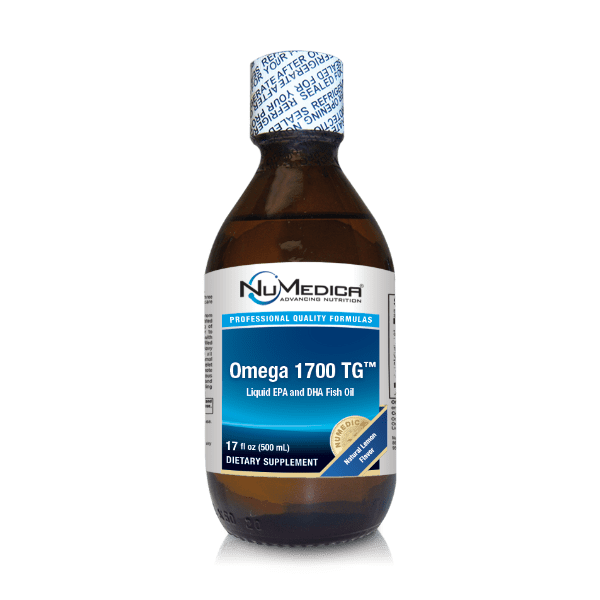
NuMedica Omega 1700 TG
Liquid EPA and DHA Fish Oil in Natural Lemon Flavor*
NuMedica Omega 1700 TG provides concentrated EPA and DHA omega-3 fatty acids in a liquid triglyceride fish oil format for cardiovascular, cognitive, and wellness-focused routines. Available in 17-fluid-ounce size.*
Warning: Array to string conversion in /home/cdndelivery/public_html/php/show_project_brand_product.php on line 840
Array
-
Description*
High-potency liquid triglyceride-form omega-3 support with flexible daily dosing
NuMedica Omega 1700 TG is a concentrated liquid omega-3 fish oil formula designed for adults looking for flexible, higher-intake omega-3 supplementation within cardiovascular, cognitive, metabolic, and wellness-focused routines. Each teaspoon provides a substantial amount of EPA and DHA omega-3 fatty acids in a natural, lemon-flavored liquid.
Unlike foundational omega softgels intended primarily for moderate daily maintenance, Omega 1700 TG is structured around concentrated liquid omega intake and adjustable serving flexibility. This positions the formula differently from standard daily fish oil products, which are centered on lower-potency capsule-based routines.
The omega-3 fatty acids in Omega 1700 TG are provided in the triglyceride (TG) form, which reflects the naturally occurring structure of omega-3 fats found in fish.
Omega 1700 TG is best understood as a concentrated liquid triglyceride-form omega designed for individuals who prefer flexible dosing, higher omega intake, or liquid delivery formats over multiple softgels.
How concentrated liquid omega-3 products are commonly used
Concentrated liquid omega-3 formulas are often incorporated into structured wellness routines centered around cardiovascular support, cognitive wellness, active lifestyles, metabolic-focused nutrition habits, and broader omega-3 intake goals. Liquid formats are frequently selected by individuals who prefer adjustable serving sizes or want to avoid taking multiple capsules each day.
Some individuals incorporate liquid omega-3s into smoothies or meal-based wellness routines, while others take them directly by teaspoon as part of daily supplement schedules.
Compared to foundational omega softgels, concentrated liquid omega products are commonly used within more intentional omega-3 intake strategies where serving flexibility and higher omega intake become greater priorities.
What makes Omega 1700 TG different
Omega 1700 TG provides concentrated EPA and DHA omega-3 fatty acids in a liquid triglyceride-format fish oil. The triglyceride structure reflects the natural form of omega-3 fats found in fish and is commonly discussed in premium omega formulations.
The liquid format allows serving amounts to remain flexible depending on dietary preferences, household use patterns, and overall omega-3 intake goals.
Unlike softgel omega products that may require multiple capsules to achieve higher omega intake levels, Omega 1700 TG allows larger amounts of EPA and DHA to be consumed in a single teaspoon serving.
The lemon-flavored liquid format is also designed to support long-term routine consistency for individuals who prefer liquid omega products over capsule-based supplementation.
Omega 1700 TG compared to Omega 950 TG
Both Omega 1700 TG and Omega 950 TG provide omega-3 fatty acids in the triglyceride form, but the products are structured around different delivery preferences and routine styles.
Omega 1700 TG Omega 950 TG Format Liquid fish oil Softgel fish oil Primary approach Flexible high-potency liquid omega intake Concentrated daily softgel omega support Serving flexibility Adjustable teaspoon dosing Pre-measured softgel servings Routine style Higher-intake or liquid-based omega routines Convenient capsule-based omega routines Commonly selected for Users preferring liquid triglyceride-form omega delivery Users preferring concentrated triglyceride-form omega softgels These products represent different omega delivery strategies rather than stronger or weaker versions of the same formula. Omega 1700 TG emphasizes flexible liquid triglyceride-form omega intake, while Omega 950 TG centers on concentrated softgel convenience in the triglyceride form.
Where Omega 1700 TG fits in everyday routines
Omega 1700 TG is typically used once or multiple times daily as part of structured omega-3 supplementation routines centered around cardiovascular wellness, cognitive support, active lifestyles, and long-term nutrition habits.
The liquid format makes it easier to adjust serving amounts depending on individual preferences, family use patterns, or broader dietary routines.
Because the product provides substantial omega-3 amounts per serving, it is often selected by individuals who want concentrated omega intake without relying on multiple softgels throughout the day.
Who this product is typically considered for
- Individuals looking for concentrated liquid omega-3 supplementation
- People preferring triglyceride-form fish oil products
- Adults wanting flexible omega-3 serving amounts
- Users looking to avoid taking multiple softgels daily
- Those building structured cardiovascular, cognitive, metabolic, or wellness-oriented omega routines
Which omega formulas are commonly explored for different routines?
Common preference Often explored products High-potency liquid triglyceride-form omega Omega 1700 TG Foundational daily omega softgel Omega 600 EE Higher-potency enteric-coated omega support Omega 750 EE Premium triglyceride-form omega softgel Omega 950 TG Vegan algae-based omega support OmegAlgae TG520 Advanced absorption omega technology OmegaOne 3x What this product is not designed to replace
Omega 1700 TG is not designed to replace balanced nutrition, fish consumption, physical activity, or broader lifestyle habits that contribute to cardiovascular, neurologic, metabolic, and wellness support over time.
It is best understood as a concentrated liquid omega-3 supplement intended to fit within a larger nutrition and wellness-focused routine.
A flexible liquid triglyceride-form omega-3 approach
NuMedica Omega 1700 TG provides concentrated EPA and DHA omega-3 fatty acids in a lemon-flavored liquid triglyceride fish oil designed for flexible daily use. Its role centers on supporting higher-intake omega-3 routines through an adjustable liquid delivery format that can be incorporated consistently into structured wellness practices.
-
Features*
-
Directions
Size: 17 Fluid Ounces
Serving Size: 1 teaspoon (5 mL)
Servings Per Container: 100
Directions: Take one teaspoon 1-4 times per day or as directed by your healthcare practitioner.
-
Ingredients
Nutrient/Ingredient Amount % Daily ValueDV 1 Calories Calories
When people talk about the calories in food, what do they mean? A calorie is a unit of measurement—but it doesn't measure weight or length. A calorie is a unit of energy. When you hear something contains 100 calories, it's a way of describing how much energy your body could get from eating or drinking it.
KidsHealth from Nemours, https://kidshealth.org/en/kids/calorie.html
40 Total Fat Total Fat
This number on a food label indicates how much fat is in a single serving of a food. Limit total fat to less than 25% to 35% percent of the calories you consume each day. All fats have 9 calories per gram.
WebMD, https://www.webmd.com/food-recipes/definitions-glossary
4 g One Teaspoon (5ml) Contains:
Saturated Fat Saturated Fat
Usually solid at room temperature, saturated fats are found in animal products such as meat and milk, as well as in coconut and palm oil. Saturated fat is often used in foods to prevent rancidity and off flavors. No more than 5% to 10% of your total daily calories should come from saturated fat.
WebMD, https://www.webmd.com/food-recipes/definitions-glossary
1 g Polyunsaturated Fat Polyunsaturated Fat
Polyunsaturated fat is a type of dietary fat. It is one of the healthy fats, along with monounsaturated fat. Polyunsaturated fat is found in plant and animal foods, such as salmon, vegetable oils, and some nuts and seeds.
https://medlineplus.gov/ency/patientinstructions/000747.htm
2 g Monounsaturated Fat Monounsaturated Fat
Monounsaturated fats are healthy fats found in olive oil, avocados and certain nuts. In fact, the evidence shows that monounsaturated fats have a number of health benefits. They can help with weight loss, reduce the risk of heart disease and decrease inflammation.
https://www.healthline.com/nutrition/monounsaturated-fats
1 g Cholesterol Cholesterol
Vital for building hormones and cell membranes. Your body makes most of the cholesterol it needs. Cholesterol is listed under the fat information on a nutrition label.
WebMD, https://www.webmd.com/food-recipes/definitions-glossary
15 mg Omega-3 Fatty Acids Omega-3 Fatty Acids
Omega-3 Fatty Acids, such as EPA and DHA, support heart, brain, eye, and joint health with anti-inflammatory benefits.
1,400 mg EPA (eicosapentaenoic acid) (740-875 mg) EPA
(Eicosapentaenoic Acid) - An omega-3 fatty acid commonly associated with cardiovascular wellness, joint comfort, and broader inflammatory balance discussions.
DHA (docosahexaenoic acid) (460-575 mg) DHA
(Docosahexaenoic Acid) - An omega-3 fatty acid that is highly concentrated in the brain and eyes and is commonly discussed in relation to cognitive and visual wellness.
Other Omega-3 Fatty Acids (200-500 mg) 1 The % Daily Value tells you how much a nutrient in a serving of food contributes to a daily diet. 2,000 calories a day is used for general nutrition advise. -
Related Content*
 Additional Resources
We encourage you to take advantage of these related Wellness Resources on our website.
 #1 Weight Loss Tip- Don't Read the Labels
Many people ask what diet we recommend, and the answer is simpler, and less expensive than you might first believe.
7 Supplements to Boost MetabolismWe all know that a healthy diet and plenty of exercise are essential for staying healthy. Did you know that supplementing your diet with the right vitamins and minerals can help maintain a healthy weight? Some vitamins and minerals can even help boost our metabolism.
Pretty Skin Begins HereDo you wonder, "What else can I do for my skin?" If you've tried over the counter solutions, chemical peels, microdermabrasion, avoiding the sun, and all sorts of other potions, you may need to re-think your skin regimen.
Something's Fishy- Tastes like Skittles???What do you do when you grow up in a wellness minded family? You just might compare this Fish Oil to... Skittles?
Understanding Inflammation's Link to Obesity, Diabetes, & DiseaseThis article provides introductory knowledge on the role of blood sugar and body fat on inflammation. Inflammation is the center-point of disease and the main contributor to obesity.

Fatal error: Uncaught Error: Undefined constant "MEDIA_DIRECTORY" in /home/cdndelivery/public_html/includes/core.php:7324 Stack trace: #0 /home/cdndelivery/public_html/php/show_product_reviews.php(215): displayRatingStars('5', 'FA', '1X') #1 /home/cdndelivery/public_html/php/show_project_brand_product.php(1076): include_once('/home/cdndelive...') #2 /home/cdndelivery/public_html/product/index.php(13): require_once('/home/cdndelive...') #3 /home/cdndelivery/public_html/url-traffic-manager/index.php(201): include('/home/cdndelive...') #4 {main} thrown in /home/cdndelivery/public_html/includes/core.php on line 7324